
La Quinta, CA · Garage Door Service
Garage Door Spring Repair, La Quinta
Broken torsion spring on a La Quinta house built in the 80s or 90s? Here's what the fix involves, what drives the cost, and why these springs fail here.
- Repairs & new doors
- Springs & openers
- Serving 7 nearby communities
What You Pay
We can't quote a number here without seeing the door, because spring repair cost depends on whether you've got one torsion spring or two, the door's weight, and whether the drums or cables need replacing at the same time. What we can tell you is what drives the price up or down. A single door with one spring is usually a smaller job than a double door running two springs in tandem, which is common across La Quinta's 1980s and 90s tract construction. If a cable has jumped the drum or frayed, that gets replaced alongside the spring rather than left for a second call - it's cheap now and expensive later. We size springs to the actual door weight and cycle count we expect out here, not a generic replacement part, because an undersized spring in this heat band fails again inside a year or two. Ask for the number on the phone before the truck rolls; a shop that won't give you a range before looking isn't being careful, it's stalling.
How We Fix It
We unload spring tension with a winding bar, never by cutting the spring under load, and pull the old one off the stationary cone. Torsion springs are matched to door weight and wire gauge, so we measure the old spring's wire diameter, coil length, and inside diameter rather than guessing off a parts bin. On doors from La Quinta's 1977-1999 building wave, we're usually dealing with the original torsion hardware or a prior replacement that undersized the spring for the door. We check the drums, end bearings, and center bearing plate while the shaft is exposed, since those parts wear at the same rate as the spring and a worn bearing will eat a new spring fast. Cables get inspected for fraying at the drum and bottom bracket. Once the new spring's wound to the correct turns for the door height, we cycle the door by hand before touching the opener, checking balance at the halfway point. A door that's genuinely balanced should hold its position on its own; if it doesn't, something's still off and we don't call it finished.
What You Are Seeing
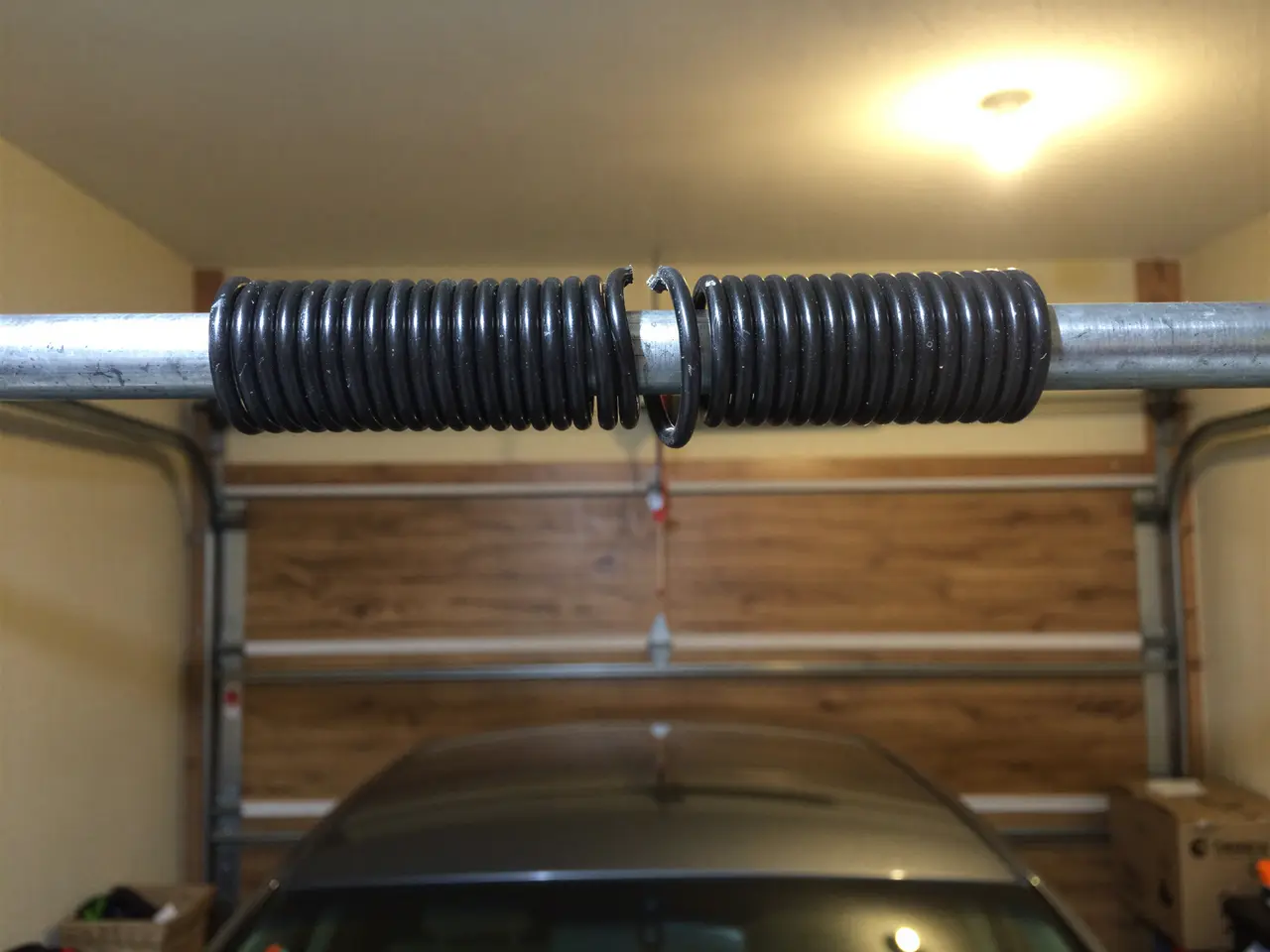
The door won't open, or it opens a few inches and stops. The opener motor strains and clicks but the door barely moves, because the opener was never built to lift the door's full weight alone - that's the spring's job. You might hear a loud bang from the garage, usually when nobody's home, which is the spring letting go under tension. Sometimes it's slower: the door's gotten noticeably heavier to lift by hand over a few months, a sign the spring is weakening rather than fully broken. On double doors you may see one spring still coiled tight next to one that's gone slack or visibly separated. If the door comes down fast and hard instead of settling, that's also spring tension gone, not a track problem. None of these are opener issues, even though the opener usually takes the blame first since it's the part making noise and effort.
Why This Fails Locally
Most houses across La Quinta and the surrounding area - Vista Santa Rosa, Indian Wells, Bermuda Dunes, and the other 11 named communities in this stretch - went up between 1977 and 1999, with the bulk clustered in the 1980s and 90s. That generation of doors runs torsion springs rated for a cycle count and temperature range that doesn't hold up well against a severe heat band. Steel spring wire loses temper faster under sustained high heat, and a garage that sits closed all day in summer runs hotter than the outside air. A spring sized correctly in 1988 for average summers is working harder now, cycling the same number of times but with less margin before fatigue sets in. That's why spring failure here skews toward age-matched or slightly undersized original hardware rather than brand-new doors. It's also why a straight swap with an off-the-shelf spring, instead of one sized for the heat and the door, tends to fail again sooner than it should.
Frequently asked questions
Why did my garage door spring break with no warning?
Torsion springs fail by fatigue, not overnight wear, so there's rarely a warning beyond the door getting gradually heavier to lift. Once the wire reaches its cycle limit under sustained heat, it lets go - often with a loud bang. The lack of warning is normal; it doesn't mean something else is wrong with the door.
Can I replace one spring on a double-spring door?
You can, but we don't recommend it. If one spring failed from age and fatigue, the second one is usually close behind on the same cycle count. Replacing both at once costs less than two separate service calls and keeps the door balanced evenly on both sides.
Is it safe to open the door by hand after a spring breaks?
It's physically possible but the door will be heavy and can drop suddenly, which is a real risk to hands and feet. We'd rather you leave it shut and call than try to force it open without tension support.
How long does spring repair take once you're on site?
Most single-spring jobs are quicker than double-spring jobs, and either can run longer if we find worn cables, drums, or bearings that need replacing alongside the spring. We check those parts before we call the job done, not after.
Related services
By Neighborhood
Spring Repair across the La Quinta area
We also handle spring repair in these La Quinta-area suburbs.
Book garage door service in La Quinta
Call now or request a quote - tell us what the door is doing and where you are.