
La Quinta, CA · Garage Door Service
Openers and Power Outages in La Quinta Homes
La Quinta's 1980s-era openers meet triple-digit summer heat and grid strain. Here's what actually fails, why, and what a repair job depends on.
- Repairs & new doors
- Springs & openers
- Serving 7 nearby communities
What You Pay
There's no flat number to give you here, because the job depends on what's actually bolted to your ceiling bracket. A lot of that depends on when your house went up. Housing in this service area runs mostly 1977 to 1999, with the median landing around 1987 - and that matters because an opener from that era is either the original chain-drive unit or its first replacement, both of which are long past the point where parts sit on a shelf anywhere.
If your logic board is dead and the unit is a sealed 1990s model, you're not paying for a board swap - you're paying for a new opener, because nobody stocks boards for units that old. If the unit is newer and it's a capacitor or a sensor, that's a smaller job. The honest answer is that we can't quote a price without seeing the unit, the bracket, and whether the circuit board already shows heat damage. Anyone who gives you a number over the phone for a house in this area hasn't looked at your opener yet.
The Problem
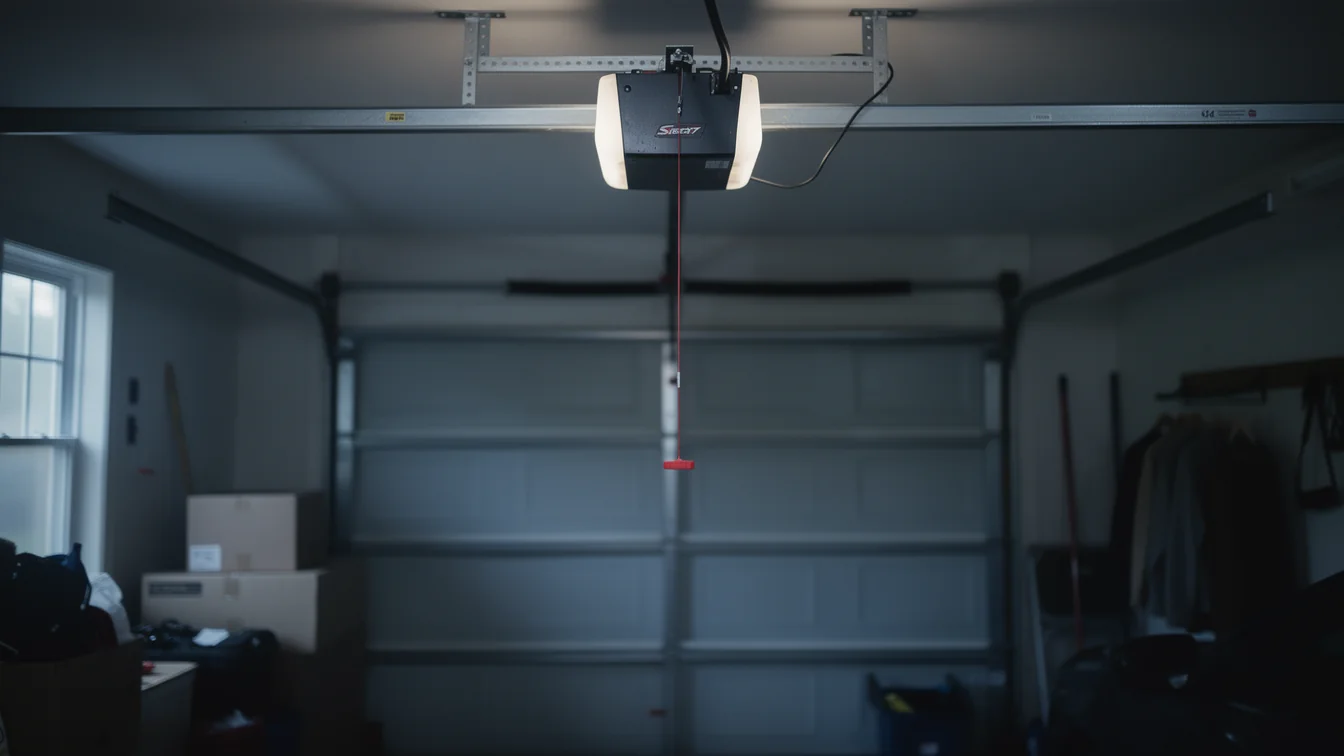
The opener itself usually isn't the first thing that fails - it's what's feeding it. Across this area's housing stock, built mostly in the 1980s and 90s, a huge share of openers are still running on their original circuit boards, and those boards were never built to handle the heat load this climate puts on an attached garage ceiling. Severe heat here doesn't just make the garage uncomfortable to stand in - it cooks the plastic gear housings and the solder joints on the logic board from the inside, year after year.
The second half of the problem is the power itself. Grid strain during the worst heat stretches causes short outages and brownouts, and an opener with no battery backup just stops where it is - sometimes mid-cycle, with the door half up. Homeowners call this an opener failure. Often it's really a power event hitting a board that was already weakened by a decade of heat cycling, and the two together take out a unit that might have run another few years under milder conditions.
Where People Go Wrong
The most common mistake we see is treating a dead opener as a simple swap-the-motor job. People hear the unit click or hum and assume the drive is bad, when the real failure is upstream - a board that's taken enough heat cycling that it's no longer reading the wall switch or the remote reliably. Replacing the motor on a unit like that just delays the same failure by a season.
The second mistake is skipping battery backup entirely, especially on houses from the 1980s and 90s stock that were built before backup units were standard equipment. People find out they need one when a heat-driven power outage leaves the door stuck halfway through a cycle, usually when they're already late for something. We don't push backup batteries on every call - if your opener is old enough that the drive train itself is failing, spending money on a battery for a unit that's about to need full replacement anyway isn't worth it.
What the Weather Here Does to It
Severe heat is the category this area sits in, and it does two separate kinds of damage to a garage opener over the years. First, it bakes the plastic housing around the motor and gear set, making it brittle - you'll see this as a unit that runs louder than it used to, or a gear that strips instead of turning. Second, it stresses the circuit board directly. Repeated heat-cool cycling loosens solder joints over time, and a board that's marginal in spring can fail outright the first week temperatures peak.
That heat load is also why power outages hit harder here than the outage itself would suggest. When the grid strains during the worst stretches and the power drops even briefly, an opener with a board that's already thermally stressed is far more likely to come back up in a bad state - stuck, unresponsive, or cycling on its own - than a newer unit would. It's not one event causing the failure. It's the heat doing slow damage for years, with the power outage as the thing that finally shows it.
Frequently asked questions
Why does my garage door opener act up every summer?
If your opener's board has been heat-cycling for years - common in houses from this area's 1980s and 90s stock - the solder joints and gear housing weaken gradually. Summer heat is when that weakness finally shows up as a failure, not when the damage actually started.
Do I need a battery backup on my opener?
Depends on the unit. If the drive train and board are otherwise sound, a backup battery is worth adding given how often heat-driven power outages hit this area. If the opener is old enough that the motor or board is already failing, a backup battery just delays a replacement you'll need anyway.
My door stopped halfway up during a power outage. Is that the opener's fault?
Usually it's the power event hitting a board that was already weakened by years of heat exposure, not a sudden opener failure on its own. The two tend to show up together - a brief outage during a heat spike is often the thing that finally reveals a board that's been failing slowly for a while.
Related garage door services in La Quinta
More garage door guides
Book garage door service in La Quinta
Call now or request a quote - tell us what the door is doing and where you are.