
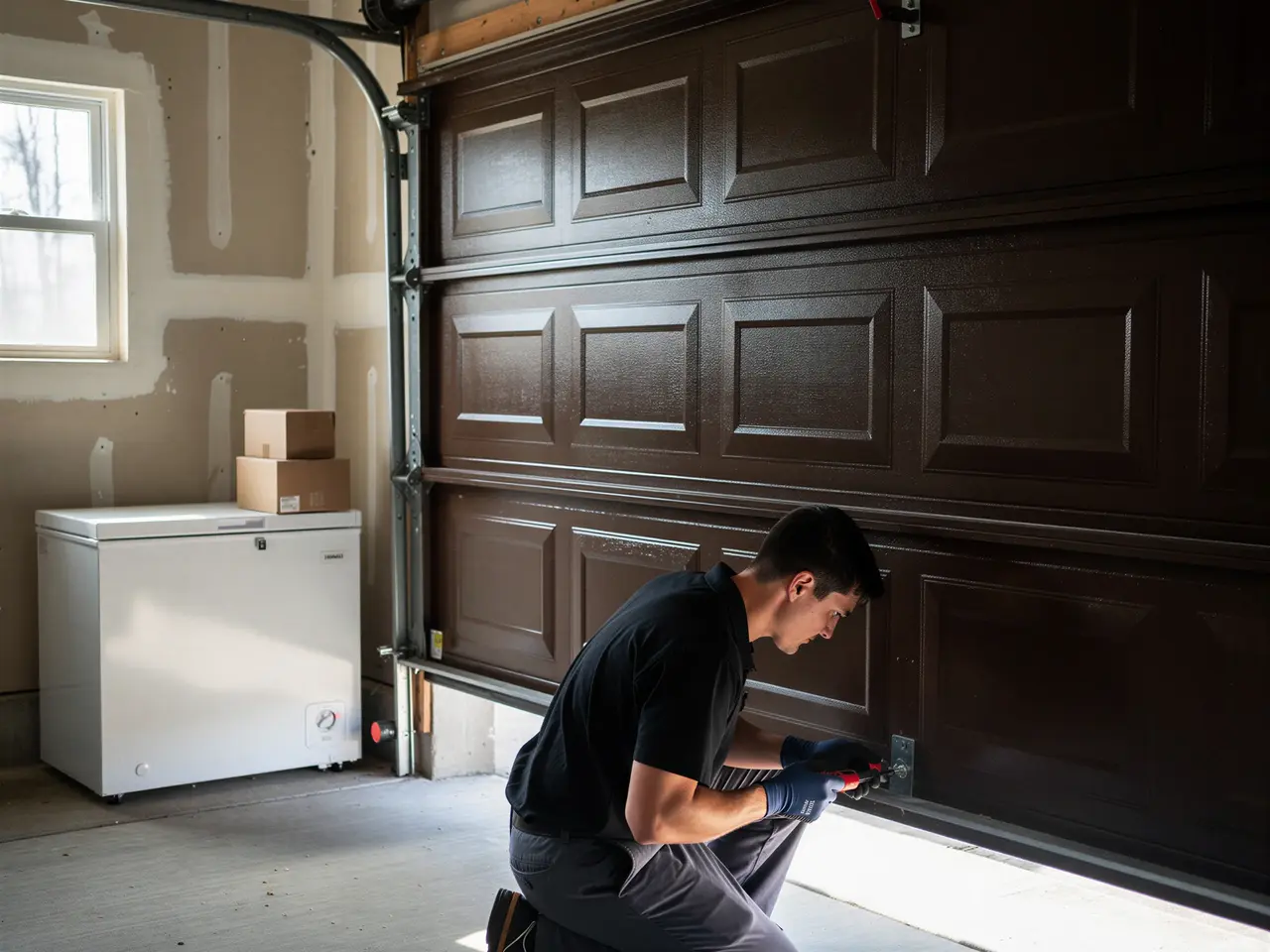
La Quinta, CA · Garage Door Service
Garage Door Repair Built Around La Quinta's 1980s Housing Stock
Garage door repair for La Quinta homes built 1977-1999, where torsion springs and plastic rollers wear fast in extreme desert heat. Local, straight answers.
- Repairs & new doors
- Springs & openers
- Serving 7 nearby communities
What You Pay
We don't post a flat number here because a broken spring on a standard torsion setup and a shot opener logic board are two different jobs with two different parts lists. What we can tell you is what drives the number: whether it's one spring or a pair (most La Quinta doors from the 1977-1999 build wave run two), whether the drum or bearing plate is also worn, and whether your opener is old enough that a replacement board costs more than a new unit. Houses in this area carry a median household income of $74,378, and most jobs we quote land in a range that reflects a working household's budget, not a luxury remodel. We'll give you the number before we touch the door, not after.
One honest limit: if your opener is a discontinued model from that era and the part is special-order, we'll tell you the lead time up front rather than promise a same-day fix we can't back.
How We Fix It
Most calls start the same way: we check the torsion spring wind, the cable condition, and the roller track alignment before we touch the opener, because in a neighborhood built mostly between 1977 and 1999, the springs and rollers are original-era hardware even if the opener's been swapped once or twice. We measure the spring wire gauge and inside diameter against the door's weight rather than guess from the garage's age alone. If the fix is a spring replacement, we match the wind type to what's already on the shaft rather than force a universal part that'll bind the drum. For track and roller issues, we check for the plastic roller wear that's common across the 1980s-90s stock here before recommending nylon or steel replacements rated for sustained heat.
We don't replace a whole door assembly when a spring or a set of rollers solves it. That call gets made on the driveway, with the panel open, not from a price sheet.
What You Are Seeing
A door that groans on the way up, hesitates halfway, or slams the last foot down is almost always a spring losing tension unevenly, not an opener problem, even though the opener usually gets blamed first. If the door shudders side to side instead of moving straight, look at the rollers before the track - in homes from this area's main building period, the original plastic rollers get brittle and start binding rather than rolling. A door that won't fully seal at the bottom, letting light or heat in along the edge, often means the roller or hinge wear has let the panel rack slightly out of square.
If your opener just hums and the door doesn't move, that's usually the spring carrying no tension at all - the opener isn't broken, it's just trying to lift dead weight it was never built to lift alone.
Why This Fails Locally
La Quinta sits in a severe heat band, and that matters more to a garage door than most homeowners expect. Torsion springs are rated by cycle count assuming a working lubricant film; sustained high heat thins that lubricant faster, so springs here fatigue and snap sooner than the same spring would in a milder climate. The housing stock across the service area - mostly built 1977 through 1999, with a median year of 1987 across the 11 named areas we cover - means a lot of doors are still running original-era torsion hardware that was sized for 1980s door weights, not today's heavier insulated panels some owners have swapped in.
Plastic rollers and nylon bushings from that era weren't built for decades of 100-plus-degree garage interiors, and that's exactly what you get with a west or south-facing garage in this area. Add in the sheer number of owner-occupied houses here - 23,542 of the 38,841 households in the service area - and you've got a lot of doors hitting the same failure point around the same age, just on different years depending on when the house was built.
Frequently asked questions
Why does my garage door spring keep breaking in La Quinta specifically?
Heat is the main driver. Torsion springs rely on a lubricant film to resist metal fatigue, and La Quinta's severe heat band thins that film faster than a moderate climate would. Combine that with original 1980s-era hardware still in a lot of local garages, and springs reach their cycle limit sooner than the rated lifespan suggests.
My house was built in the late 1980s - is the opener original too?
Sometimes the opener's been replaced once already, but the spring and track hardware often aren't, since they don't fail as visibly until they snap. We check both on every call rather than assume one matches the other's age.
Is it worth fixing an old opener or should I replace it?
If the motor and logic board are both failing, a new unit usually costs less than parts plus labor on a discontinued board. If it's just the spring doing the work the opener can't handle, fixing the spring is almost always the cheaper and correct call.
How fast do plastic rollers wear out here compared to other places?
We don't have a specific lifespan number to quote, but sustained high garage temperatures accelerate the brittleness that causes plastic rollers to crack and bind. If your door shudders or sticks on the track, that's usually the first sign, regardless of the exact age.
By Neighborhood
Garage Door Repair across the La Quinta area
We also handle garage door repair in these La Quinta-area suburbs.
Book garage door service in La Quinta
Call now or request a quote - tell us what the door is doing and where you are.