
La Quinta, CA · Garage Door Service
What Garage Door Work Really Looks Like in La Quinta
What La Quinta homeowners actually pay, why 1980s-90s doors fail here, and how severe desert heat wears springs, openers, and tracks faster than cooler climates.
- Repairs & new doors
- Springs & openers
- Serving 7 nearby communities
What You Pay
We're not going to hand you a number we can't back up - pricing depends on what's broken, what the door is, and whether parts are still available for it. What we can tell you is what drives cost in this area specifically. Median household income across the service area sits at $74,378, and with 38,841 households and 23,542 owner-occupied houses in the mix, most of what we see isn't luxury hardware - it's standard builder-grade doors from the 1977-1999 construction wave, with a median build year around 1987. That matters for cost because parts for a door that age aren't always sitting on a shelf. A torsion spring swap on a standard door is usually straightforward. A full opener replacement on a house with original 1980s rail and track costs more because the mounting and headroom often don't match current kits. The honest answer: ask for a number after we've looked at the door, not before. Anyone quoting a flat price over the phone for a spring they haven't seen is guessing.</br>If your door and opener are both original to a house built in that late-70s-to-90s window, budget for both needing attention around the same time - they wore out together under the same conditions.
The Problem
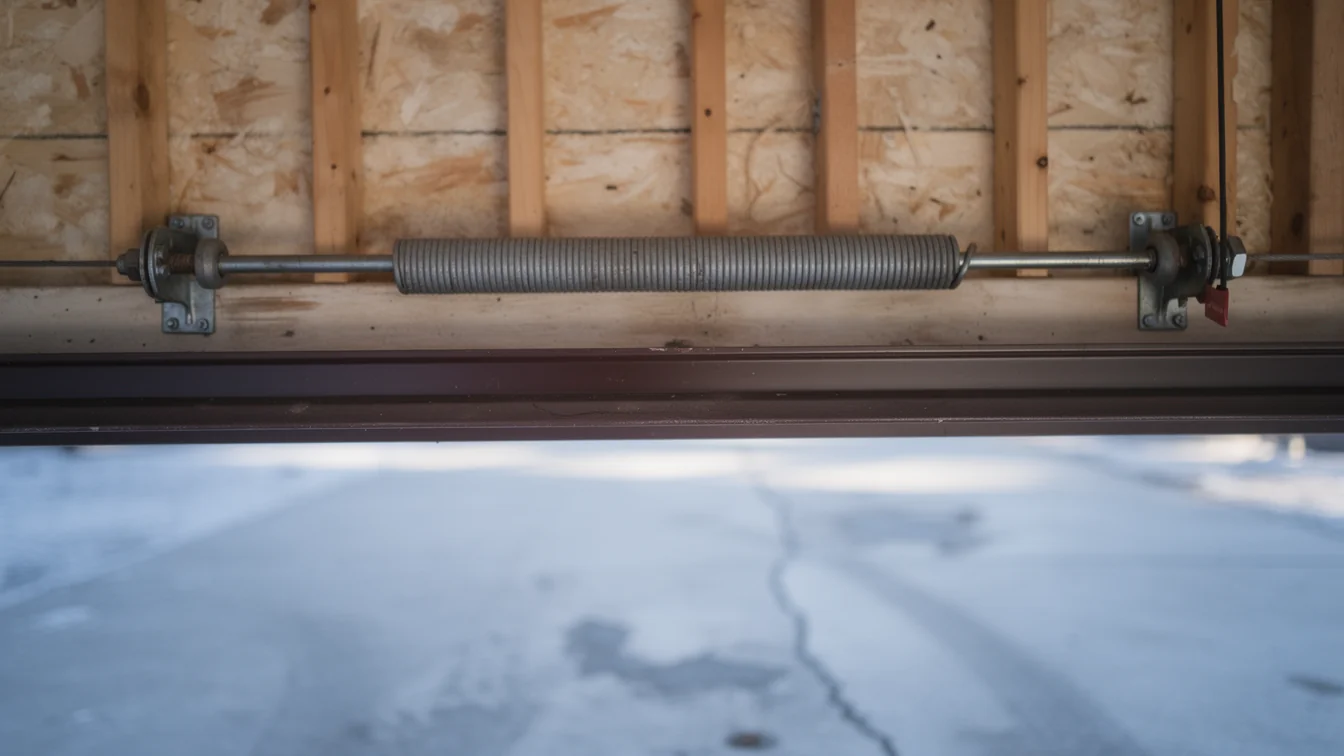
The doors going bad right now in La Quinta aren't failing randomly. They're failing because they're 25 to 45 years old, built during the 1977-1999 run that makes up most of the housing stock across the eleven areas this company covers, from Vista Santa Rosa and Bermuda Dunes in close to Sky Valley and Mecca further out. A steel torsion spring has a rated cycle life, and that life gets used up faster here than in a mild climate, because the severe heat band this area sits in puts extra strain on the spring every single day, not just in summer. The galvanized coating on an older spring also breaks down under sustained heat, which is why you see more spring failure here per door-year than you'd expect from age alone. Openers from that same building era are the other half of the problem - the gears, drive belts, or chains on a 1980s or '90s opener are worn from three decades of thermal cycling, and when the plastic gear in an old chain-drive finally strips, it's usually all at once, mid-cycle, door half open. That's the call we get most.
Where People Go Wrong
The most common mistake is treating a garage door here like it's in a mild climate town. People grease a spring with whatever's in the garage, not a lubricant rated for sustained high heat, and it gums up fast instead of protecting the coil. Another one: assuming a replacement part off a shelf will match a door installed during the 1977-1999 building era. Track widths, spring wind direction, and drum sizes shifted over that stretch, and a part that's close but not exact will bind or wear out again within months.</br>We also see people wait too long on a door that's limping. A door with a weak spring doesn't fail cleanly - it strains the opener to compensate, and now you're replacing two things instead of one. If your door is original to a house built in that 1980s-90s window and it's started groaning or dropping unevenly, that's the spring telling you it's near the end of its rated life, not a one-time glitch to ignore. The honest limitation here: we don't recommend patching a 35-plus-year-old torsion spring system piece by piece. Past a certain point, replacing the full spring and cable assembly together costs less over time than repeat service calls.
What the Weather Here Does to It
This area sits in a severe heat climate band, and that heat does specific, predictable damage to garage door hardware over years of exposure. Steel springs expand and contract with temperature swings every day, and in a severe heat zone that cycling is harsher and more constant than it is in a mild one - the metal fatigues faster, and tension drops sooner than the spring's rated cycle count would suggest in cooler conditions. Nylon rollers and plastic opener gears get brittle under sustained heat exposure, which is why cracked rollers and stripped gears show up more here than cracked cables do. Out toward Thermal and Mecca, eight and thirteen miles from the center of this service area, that heat runs even harder on exposed hardware sitting in direct sun most of the day, and doors facing west or south take it worst.</br>None of this means replace everything on a schedule - a door that's shaded and maintained can run fine well past what you'd expect. It means that when something does start to go on a door from the 1977-1999 era, heat fatigue is almost always part of why, not just age on its own.
Frequently asked questions
Why do springs seem to fail more often here than other places I've lived?
Severe heat cycling wears steel springs faster than a mild climate does - the metal expands and contracts daily, not just seasonally, and that fatigues the coil ahead of its rated cycle count. Combined with a lot of local housing dating to the 1977-1999 era, a lot of original springs are simply past due.
Is it worth repairing an opener from the 1980s or 90s instead of replacing it?
Depends on what's failed. A drive gear or belt is often a reasonable repair. If the circuit board or motor windings have gone from decades of heat exposure, replacement usually costs less than chasing repeated failures on original hardware that age.
Do you serve areas outside La Quinta itself?
The service area covers eleven named communities within about 18 miles, including Vista Santa Rosa, Indian Wells, Bermuda Dunes, Coachella, Thermal, Desert Palms, Oasis, Rancho Mirage, Thousand Palms, Mecca, and Sky Valley.
Related garage door services in La Quinta
More garage door guides
Book garage door service in La Quinta
Call now or request a quote - tell us what the door is doing and where you are.